Art that Moves! -the Art of Light, Sound and Movement
Art that Moves! -the Art of Light, Sound and Movement
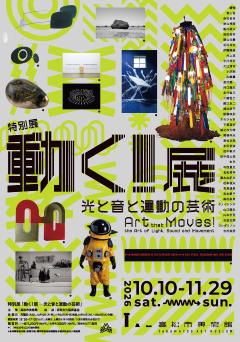
The art of post-World War II Japan has continued to evolve in diverse ways. Its trajectory has been shaped by the emergence of pieces transcending such traditional genres as painting and sculpture, accompanied by major changes in artists’ creative methods, the studios where they work, and the places where they present their art.
In the 1950s, members of avant-garde artist groups, such as the Jikken Kōbō-Experimental Workshop and the Gutai Art Association, presented works that actively incorporated new media. Alongside these artists, groups such as Fluxus and High Red Center emerged, with creators expanding the possibilities of expression through performances and events in which they themselves moved. Opportunities for presenting art also increased, including the Yomiuri Independent Exhibition, which accepted open submissions; events combining theater and film; international art exhibitions; the 1970 Japan World Exposition; and outdoor sculpture exhibitions held throughout Japan. At the same time, materials and modes of expression became increasingly diverse. Subsequent advances in technology made light, sound, and video more readily accessible as artistic media. Installations combining these elements, as well as pieces that involved audience participation and movement, gradually became established as new forms of artistic expression.
Since its opening in 1988, one of the core collecting policies of the Takamatsu Art Museum has been to build a collection around Post-War Contemporary Japanese Art, while actively introducing emerging artists through exhibitions and events. Centered on the Museum’s collection, this exhibition looks back at the history and evolution of contemporary Japanese art through the keyword “movement.” We invite you to experience the artists’ ceaseless pursuit of new forms of expression through these “moving” works.
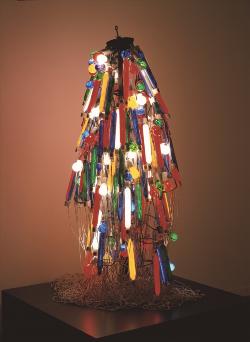
Atsuko Tanaka《Electric Dress》1956
©Kanayama Akira and Tanaka Atsuko Association
photo:Kato Shigefumi
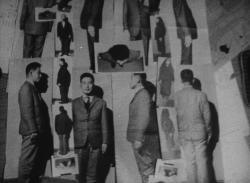
Motoharu Jonouchi《Shelter Plan》1964
Collection of the Estate of Motoharu Jonouchi

Katsuhiro Yamaguchi《Kiss》1968
©The Estate of Katsuhiro Yamaguchi
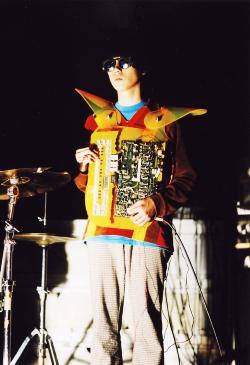
Minoru Yoshida《Synthesizer jacket #03》2000
Private Collection
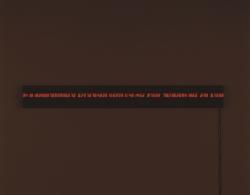
Tatsuo Miyajima《Counter Line No.1》1988
©Tatsuo Miyajima
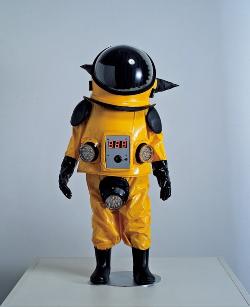
Kenji Yanobe《Mini Atom Suit》2003-13
©Kenji Yanobe
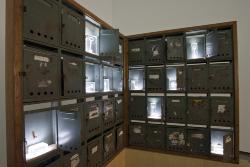
Aiko Miyanaga《post-scene》2010
©MIYANAGA Aiko, Courtesy of Mizuma Art Gallery
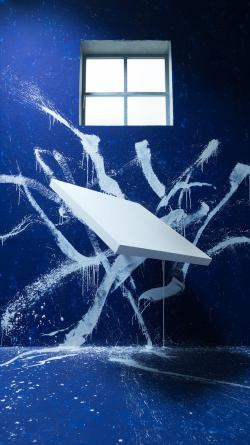
Takashi Ishida《Square Window》2015
©Ishida Takashi
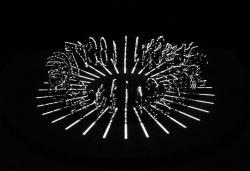
Akinori Goto《Numbers #01》2017
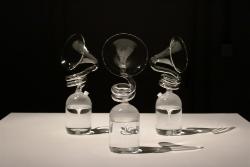
Nelo Akamatsu《Chozumaki》2016
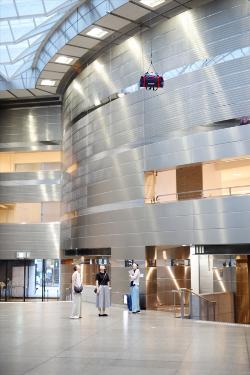
Takehiro Iikawa《Decorator Crab-Expecting Spectator》2024
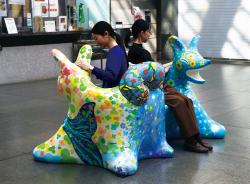
Tomoko Konoike《Wolf Bench-Takamatsu》2026
©Tomoko Konoike
Information
Period:
October 10 (Sat.)-November 29 (Sun.), 2026
Venue:
Takamatsu Art Museum
Closed:
Monday (the following weekday if Monday is a holiday)
Hours:
9:30 – 17:00 (Admission until 16:30)
*Fridays and Saturdays (October 10 to November 29): 9:30 – 19:00 (Admission until 18:30)
Admission:
【General / Seniors 65+】1,200yen(960yen)
【College students】600yen (480yen)
【High school age or younger】Admission free
※Groups of 20 or More Get Discounts (pricing in parenthesis)
※Free admission for those with a physical disability certificate, rehabilitation certificate, or mental disability certificate.
Organizerd by Takamatsu Art Museum
Grant from Japan Arts Council
Telephone Inquiry:
TAKAMATSU ART MUSEUM
TEL +81-87-823-1711
PDF形式のファイルを開くには、Adobe Acrobat Reader DC(旧Adobe Reader)が必要です。
お持ちでない方は、Adobe社から無償でダウンロードできます。
 Adobe Acrobat Reader DCのダウンロードへ